
Logo Quiz
bubble quiz gamesTrivia
4.5101.05K Reviews
- Version
- 35.7
- Installs
- 50.00M
- Age Rating
- Everyone
Screenshots
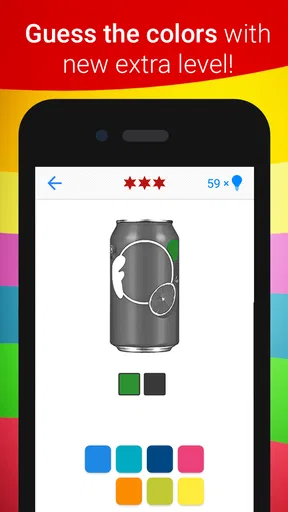
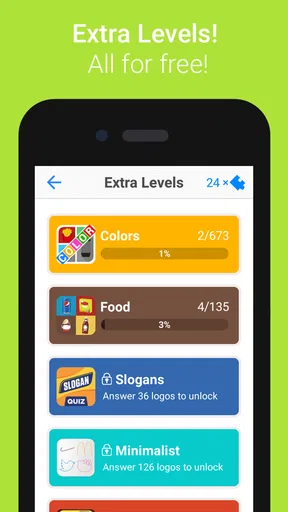
Our Review of Logo Quiz
 Analysis by Appyee
I like trivia games that can be understood in a few seconds, and Logo Quiz fits that idea almost perfectly. It is a free brand-recognition game from bubble quiz games, built around a simple question: can I identify a company from part of its visual identity? That sounds easy until a familiar mark is cropped, simplified, or shown without the wording that normally gives it away.
After spending time with it, I see the game less as a serious test of business knowledge and more as a quick visual workout. It works well when I have a spare moment, when I want something lighter than a full quiz show, or when I am playing with another person and arguing over whether a tiny design detail is enough to count as a clue. Its broad appeal is reflected in a 4.5 average from around 1.1 million ratings, while its age rating of Everyone makes it suitable for casual family play.
How to decide whether this logo trivia game suits you
I’d use this section to help you decide whether visual brand recognition is genuinely enjoyable for you, rather than mistaking the game’s quick start for a good long-term fit. A useful test is to notice whether an unfamiliar logo makes you curious enough to inspect its shapes and lettering, or whether you would rather move on to a question with a different subject.
The central decision is about the kind of challenge you enjoy
The first thing I would ask is whether you enjoy recognition puzzles more than knowledge quizzes. Logo Quiz does not mainly ask me to remember capitals, historical events, scientific facts, or celebrity details. Instead, it tests visual memory. I may know a company immediately when I see its complete sign in daily life, yet hesitate when the name is removed or only a small section remains.
That distinction matters. Someone looking for broad trivia categories may find the experience narrow, even though the number of individual prompts can make it feel substantial. Someone who likes pattern recognition, advertising design, shopping-related brands, or quick competitive challenges will probably understand the appeal much faster.
I also consider how much attention I want to give a game. This is not the sort of title I need to reserve an evening for. I can play a short session, stop after a difficult logo, and return later without needing to reconstruct a complicated story or strategy. That makes it a useful choice for waiting rooms, short commutes, or a few minutes before bed.
What the basic loop feels like in practice
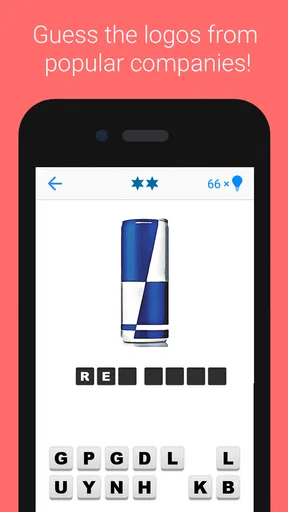
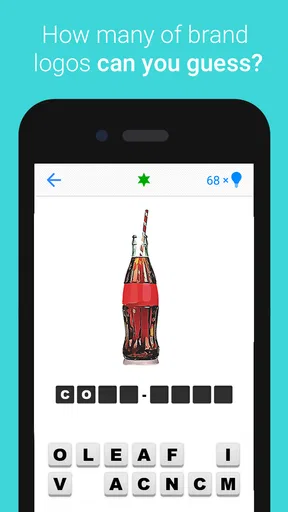
The loop is deliberately direct: I look at a logo, think of possible companies, and enter the answer. The satisfying moments come from recognition rather than from elaborate controls. A logo I have seen repeatedly can be solved almost instantly, while an unfamiliar or partially obscured design forces me to slow down and inspect shapes, colors, letter forms, and the general style of the mark.
That simplicity is also the main source of friction. If I do not recognize an image, there may be little I can do except try associations or use assistance when it is available. I cannot rely on a long chain of clues or a different question format to approach the answer from another direction. The game is strongest when I enjoy that moment of visual recall; it is weaker when I want several ways to reason toward a solution.
Useful criteria before installing
I would judge it using four practical questions. Do I enjoy brand imagery? Do I want short sessions rather than a long campaign? Am I comfortable with a game whose challenge can depend on how familiar I am with common commercial symbols? And do I mind a free game that includes optional in-app purchases priced from $0.99 to $3.99 per item?
The last point is worth considering before a difficult level appears. The download itself costs nothing, but “free” does not necessarily mean every possible convenience is free. I prefer deciding in advance whether I will simply wait, guess, or use any available help rather than making an impulse purchase because I am stuck on one image.
Why the large audience is relevant, but not decisive
The game has passed 50 million installs, and it has been available since May 28, 2012. That longevity tells me the concept has remained understandable over time, but it does not guarantee that every player will find the same level of challenge. Brand familiarity varies by age, country, shopping habits, and even the kinds of media a person follows.
For me, the broad audience is useful because it makes the game easy to share as a casual challenge. Still, I would not treat its popularity as a substitute for checking whether visual brand puzzles are actually my preferred form of trivia.
Where Logo Quiz wins over more traditional trivia games
Its biggest advantage is the low barrier to entry. I do not need to learn rules, memorize a scoring system, or understand a fictional setting. The image provides the entire invitation to play. That makes it especially approachable for someone who normally avoids trivia because written questions can feel intimidating or overly academic.
It also creates a different kind of social conversation. With a standard question, one person may know the answer and everyone else simply accepts it. With a logo, people often explain their reasoning: the color looks familiar, the lettering resembles something seen on packaging, or the shape reminds them of a shop. That makes it enjoyable for mixed-age groups, even when players do not have the same general knowledge.
Another strength is the way it exposes the gap between recognition and recall. I may identify a logo instantly in a real-world context because the surrounding product, storefront, or advertisement helps me. When that context disappears, the task becomes more demanding. I find that surprisingly good at revealing which visual details I actually remember.
Three ways I get more from each session
My first useful habit is to separate “I know this” from “this looks familiar.” Those feelings are easy to confuse. When I see a difficult mark, I mentally describe its structure before guessing: whether it is mostly text, whether it uses an emblem, whether the design feels connected to food, technology, clothing, transport, or another everyday area. This reduces random attempts and turns the game into a small observation exercise.
Second, I use wrong guesses as information rather than treating them as wasted moves. A failed answer can show that I am thinking of the right type of company but the wrong name, or that I am relying too heavily on color. I then look again at the lettering and silhouette. This approach is especially useful for logos that resemble several brands at a glance.
Third, I treat the game as a group activity by asking another person to explain what they notice without immediately saying the answer. That changes the experience from a private memory test into a discussion about design. It is a good way to include someone who may not know many brands but is observant about shapes and typography.
Small details that affect the experience
The current version is 35.7 and requires Android 5.0 or later. For an Android user with a compatible device, that makes it accessible across a wide range of hardware generations. I would still check the device requirement before installing on an older phone, particularly if I am setting it up for a child or for a family member who does not regularly update applications.
The developer is listed as bubble quiz games, and the title’s long availability suggests a familiar, established format rather than a newly experimental one. That is good if I want predictability. It is less attractive if I am searching for a trivia game that constantly changes its structure or introduces a deep progression system.
Where another category may fit better
I would choose a general-knowledge quiz instead if my main goal were learning facts across many subjects. A broad trivia app can challenge memory of geography, culture, science, and history in a way a logo-focused game cannot. It may also feel fairer to players whose brand exposure differs widely, because the questions can be answered through education rather than commercial familiarity.
I would choose a word puzzle if I prefer language-based deduction. Word games usually let me work from letter patterns, definitions, or word length. Logo Quiz gives me visual evidence instead, so a person who enjoys spelling mechanics may find its answers less satisfying, especially when they recognize an image but cannot confidently recall the exact company name.
A traditional quiz-show style game may be better for players who want timed rounds, varied categories, or a stronger sense of competition. I would also look elsewhere if I wanted a narrative, strategic decisions, or a game that rewards planning over recognition. Logo Quiz is intentionally focused; its focus is a benefit only when that is the experience I want.
There is also a fairness issue for international players. A brand that feels obvious to me may be unfamiliar to someone from another region, while a company I have never encountered may be instantly recognizable to them. That can make shared play uneven. I would recommend taking turns choosing the device or treating the game as a conversation rather than assuming everyone begins with the same knowledge base.
What switching from another trivia game really involves
Moving to Logo Quiz is easy because there is very little to learn. The cost of switching is not a complicated control scheme; it is changing what I consider a good answer. In a general quiz, I can often reason from facts. Here, progress depends more on exposure, visual memory, and careful attention to small design cues.
If I am already used to broad trivia categories, I may initially miss the variety. The solution is to use this title as a focused side game rather than a complete replacement. A short logo session can refresh my attention between more demanding quizzes, while a general-knowledge app remains the better choice for varied study or fact practice.
The opposite switch can also be revealing. Someone who finds standard trivia stressful may enjoy this game because the questions feel more concrete. However, if a player becomes frustrated whenever recognition fails, switching to a game with hints based on definitions or multiple-choice options may be kinder. The right choice depends on whether uncertainty feels playful or irritating.
How I would handle the free-to-play element
I appreciate that I can begin without paying. That matters for a casual game I may use only occasionally. At the same time, optional purchases mean I would not approach every difficult logo with the assumption that spending is the intended solution. I would first pause, revisit the image, and ask someone nearby. Those habits preserve the puzzle aspect and reduce the chance of turning a small moment of frustration into an unnecessary purchase.
For parents, the Everyone rating makes the subject matter broadly approachable, but I would still explain that optional purchases exist before handing over a device. The most useful family rule is simple: ask before buying anything. That keeps the game’s low-cost appeal intact while making expectations clear.
Who should install it, and who should skip it?
I recommend it to casual players who like recognizing brands, families looking for an easy shared challenge, and anyone who wants a trivia break that starts immediately. It is particularly suitable for people who enjoy visual details but do not want a large rulebook or a long commitment. The free entry point makes it easy to test that fit for yourself.
I would skip it if I want educational depth, constantly changing subject matter, or a strong competitive structure. I would also be cautious if commercial logos do not interest me or if I find brand-based questions arbitrary. In that case, a general trivia or word game will probably offer a more satisfying kind of progress.
My recommendation after weighing the trade-offs
Logo Quiz is best viewed as a focused visual trivia break, not a complete replacement for every kind of quiz game. I enjoy its immediate format, its ability to start conversations, and the way it makes familiar imagery unexpectedly difficult when context is removed. It is a particularly good fit for short sessions and informal play with another person.
My recommendation is strongest for Android users on version 5.0 or later who want a free, approachable game and are happy to accept optional purchases as part of that model. I would install it with realistic expectations: some answers will feel obvious, others will depend heavily on personal exposure, and the narrow subject can become repetitive if it is the only trivia game I play.
Overall, the title earns its place as a simple, accessible brand-recognition challenge. I would keep it available for those spare moments when I want to test my memory without studying or committing to a long session. If that sounds like your kind of puzzle, Logo Quiz is an easy recommendation; if you want broad knowledge, deeper strategy, or language-based deduction, another category will serve you better.
Verdict
Strengths of Logo Quiz
- Simple gameplay that is easy to understand from the first round.
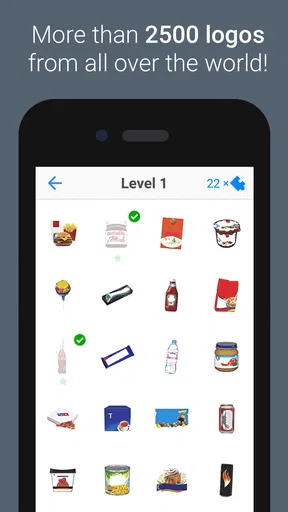
- Large variety of recognizable brands keeps the quiz engaging.
- Hints help players progress when a logo proves difficult.
- Short rounds make it suitable for quick breaks or casual play.
- Can improve visual memory and brand recognition skills.
Limitations of Logo Quiz
- Some answers may depend on regional brands unfamiliar to many players.
- Hints and extra help may be limited without watching ads or spending coins.
- Difficulty can vary sharply between consecutive levels.
- Repeated logos may reduce the challenge for experienced players.
- Frequent advertising can interrupt the flow of the game.
Similar Picks in This Category
View All
Millionaire 2026 Quiz & Trivia
Quiz & Trivia Games by Submarine Apps4.5

Brain Test 2: Tricky Stories
Unico Studio4.7

Trivia Crack: Brain Quiz Games
etermax4.4

QuizzLand. Quiz & Trivia game
Quiz & Trivia Games by Mno Go Apps4.8

Brain Test: Tricky Puzzles
Unico Studio4.7

Millionaire - Quiz & Trivia
Trivia & Quiz Games by Nuomondo4.6
Frequently Asked Questions
What is Logo Quiz and how does the game work?
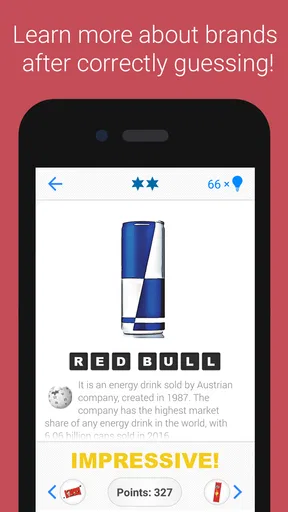
Logo Quiz is a casual trivia game in which you identify companies, brands, products, and organizations by looking at their logos. Each correct answer unlocks progress through different levels, while the difficulty usually increases as you advance. From my experience, the basic gameplay is easy to understand, but some logos are intentionally incomplete, simplified, or unfamiliar, making the later stages considerably more challenging.
Is Logo Quiz free to download and play?
Logo Quiz can generally be downloaded for free, allowing players to access the main quiz without an upfront purchase. However, the free version may include advertising, optional hints, or in-app purchases. Before downloading, check the store listing for the exact monetization details, because available hint packages, ad-removal options, and premium features can vary depending on the version and your device.
Does Logo Quiz require an internet connection?
Many parts of Logo Quiz can usually be played offline once the application has been installed, which makes it suitable for travel or situations without reliable mobile data. An internet connection may still be needed for advertisements, updates, purchases, analytics, or certain online features. If offline play is important to you, test the game after disabling connectivity rather than assuming every function will work.
Is Logo Quiz suitable for children and families?
Logo Quiz is generally easy for families to understand and can be an entertaining way to test visual memory and general brand knowledge. Nevertheless, the appropriate age depends on the specific edition, advertising content, and privacy settings. Parents should review the app-store rating, permissions, and in-app purchase controls, especially if children will play independently or use a shared device.
What should I do if I cannot recognize a logo or run out of answers?
When a logo is difficult, Logo Quiz commonly provides hints, reveals letters, removes incorrect options, or allows players to skip a question, depending on the version. Hints may be limited and could require earned coins, watching an advertisement, or making an optional purchase. I recommend trying partial brand names, checking the logo’s colors and symbols, and saving hints for genuinely unfamiliar levels.
Play our best games!


